



When I was looking for bar glassware for my very new home bar, I didn’t know what to start with after the two Martini glasses I had in my possession. There were so many and what were they all for?

It can be super confusing if you don’t know the different between a low ball and a high ball? Hopefully this list of the different bar glassware out there will help you decide what are the most versatile cocktail glasses that you need at home.
You choose and if you feel like having your Old-Fashioned in a Collins Glass well go for it – there are no rules!
Quick Take
- Discover which 10 essential glasses you actually need for a home bar setup (and which ones you can skip)
- Learn what to consider before buying barware so you don’t waste money on glasses you won’t use
- Get a step-by-step guide to selecting the right glassware for your favorite cocktails and drinks
When I set up my very first home bar, I owned two Martini glasses and nothing else. Every other glass on this list, I bought, borrowed, or found in a vintage shop because I actually needed it for a specific drink. That’s still the best way to build a collection: buy for the cocktails you make most, not for a checklist.
The 10 Glasses Every Home Bar Actually Needs
Martini Glass / Cocktail Glass

We’ll start with my favorite – The Martini Glass – so chic, so glamorous with its V shape – I just don’t feel right drinking my martini in any other glassware. The whole aim of a cocktail glass was that the cocktail stay warm as you would use the stem to bring it to your mouth. As there is no ice in cocktails in this shape, you want to try and keep it as cold as possible. Also the v shape lets you smell the drink before sipping it!
Coupe Glass
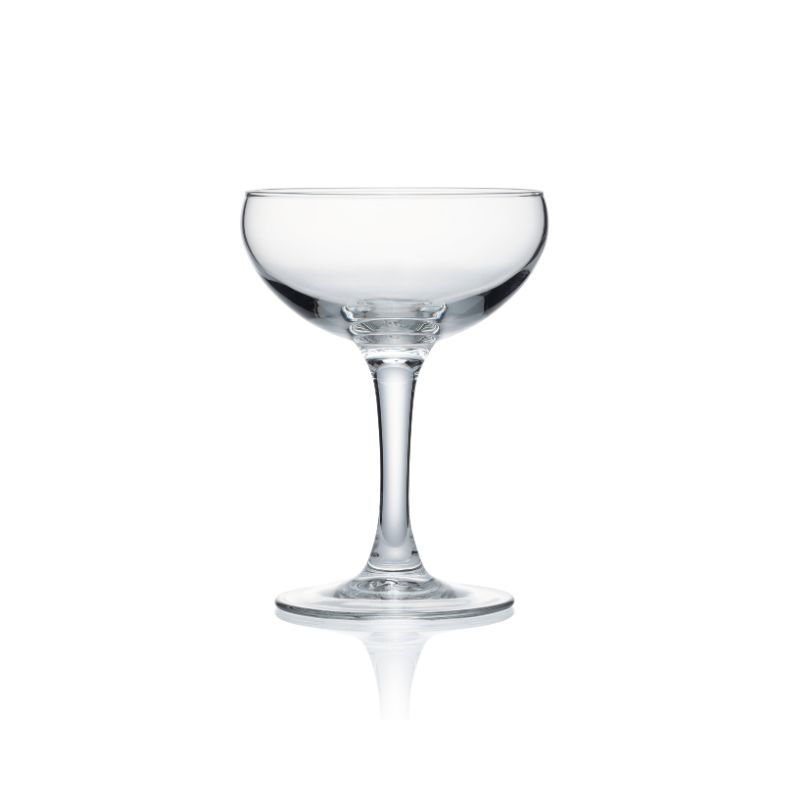
Here’s a correction worth making: the coupe and the balloon glass are not the same thing, even though they’re often lumped together. The coupe is a shallow, saucer-shaped glass with no ice, built for stirred-down cocktails like a Manhattan or shaken-up ones like a Daiquiri. It’s also the glass most vintage cocktail books point to for pre-Prohibition serves, which is exactly why it’s having a moment in home bars right now.
Rocks Glass

For anything served “on the rocks,” this is your glass. It’s the only one on this list you’re meant to hold with both hands, since the ice inside keeps it cold without you needing a stem. If you want to see one in action, my Woodford Reserve Old Fashioned is built around this exact glass, and the recipe explains why the size of your ice cube matters as much as the glass itself.
Highball/Collins

Ever had a Tom Collins, or a mojito with a paper straw? That’s a highball. Technically the Collins glass is slightly taller and narrower than a true highball, but for home bar purposes, don’t lose sleep over the difference. The tall shape is built for drinks that are mostly soda water and mixer, giving the bubbles room to stay lively.
Shot Glass

You’ve done plenty of shots. Mine, lately, is a Lebanese one I picked up in Cyprus: ¾ shot vodka, ¼ shot lemon juice, two or three drops of Tabasco, and a single pitted olive. Shot glasses are made thick on purpose, so you can slam them down on the bar after you’ve finished.
Nick & Nora Glass

Smaller than a Martini glass, rounder in the bowl, and considerably harder to spill. It got its name and its popularity during Prohibition, which is doing a lot of the romantic heavy lifting here, but the practical case is just as good: the shape holds a stirred cocktail without letting the ice melt in too fast.
Julep Cup

Technically copper, not glass, but no home bar list is complete without one. You can’t drink a proper Mint Julep out of anything else, and Moscow Mules deserve the same copper treatment. The metal stays cold to the touch, which matters more than you’d think on a hot day.
Copa/Balloon Glass

This is the big-bowled glass you get with a gin and tonic in Spain, and it deserves more airtime outside of it. The wide mouth is designed to trap botanicals, which is the entire point of a G&T. I wouldn’t serve my Pomada (Mahon gin and lemonade) in anything else.
Tropical Glasses

An umbrella needs a home, and that home is the tiki mug. Every home bar needs at least one, ideally an ugly one you love unreasonably. If you want a reason to use it, my Mai Tai roundup has half a dozen versions worth trying.
Margarita Glasses

Dip the rim in salt, fill it up, done. It’s a party glass, built wide for the salt rim and shallow enough that the drink doesn’t warm before you finish it. My classic Margarita recipe works in either a margarita glass or a coupe, if you’d rather skip the novelty shape.
At a Glance: Which Glass for Which Drink
| Glass | Capacity | Best For | Notes |
|---|---|---|---|
| Martini/Cocktail | 4–6 oz | Martinis, Manhattans up | V-shape keeps stem-holding hand off the bowl |
| Coupe | 5–7 oz | Daiquiris, Sidecars, Champagne cocktails | Shallow saucer, no ice, vintage-leaning |
| Nick & Nora | 4–5 oz | Any stirred or shaken up cocktail | Rounder, more stable than a Martini glass |
| Rocks/Old Fashioned | 8–10 oz | Old Fashioneds, Negronis, spirit-forward drinks | Built for one large cube |
| Highball/Collins | 10–14 oz | Mojitos, Tom Collins, G&Ts | Tall shape suits soda-topped drinks |
| Copa/Balloon | 15–20 oz | Gin and tonics, spritzes | Wide bowl traps botanical aromas |
| Shot Glass | 1.5–2 oz | Shots, measured pours | Thicker glass survives a slam |
| Julep Cup/Copper Mug | 10–12 oz | Mint Juleps, Moscow Mules | Metal keeps drinks ice-cold to the touch |
| Tiki Mug | 12–16 oz | Mai Tais, Painkillers, rum punches | Novelty shapes are half the fun |
| Margarita Glass | 12 oz | Margaritas, Daiquiris (frozen) | Wide rim is built for a salt or sugar edge |
Before You Buy: What to Consider
Don’t buy a full 12-piece set of anything on your first pass. Buy two of whatever glass matches the cocktail you make most, live with it for a month, then fill in the gaps. This is the single biggest way people waste money on glassware: a matching boxed set looks efficient in the store, but half of it usually sits unused because it doesn’t match what you actually drink.
Think about your cabinet space too. Coupes and Nick & Noras stack; tiki mugs and hurricane glasses don’t. If storage is tight, that alone might decide whether a piece is worth owning.
Think about how you entertain. If you host groups, prioritize highballs and rocks glasses, since those cover the widest range of crowd-pleasing drinks. If you mostly mix for yourself or one other person, a coupe and a rocks glass will get you further than you’d expect.
Specialty Glasses You Can Skip (For Now)
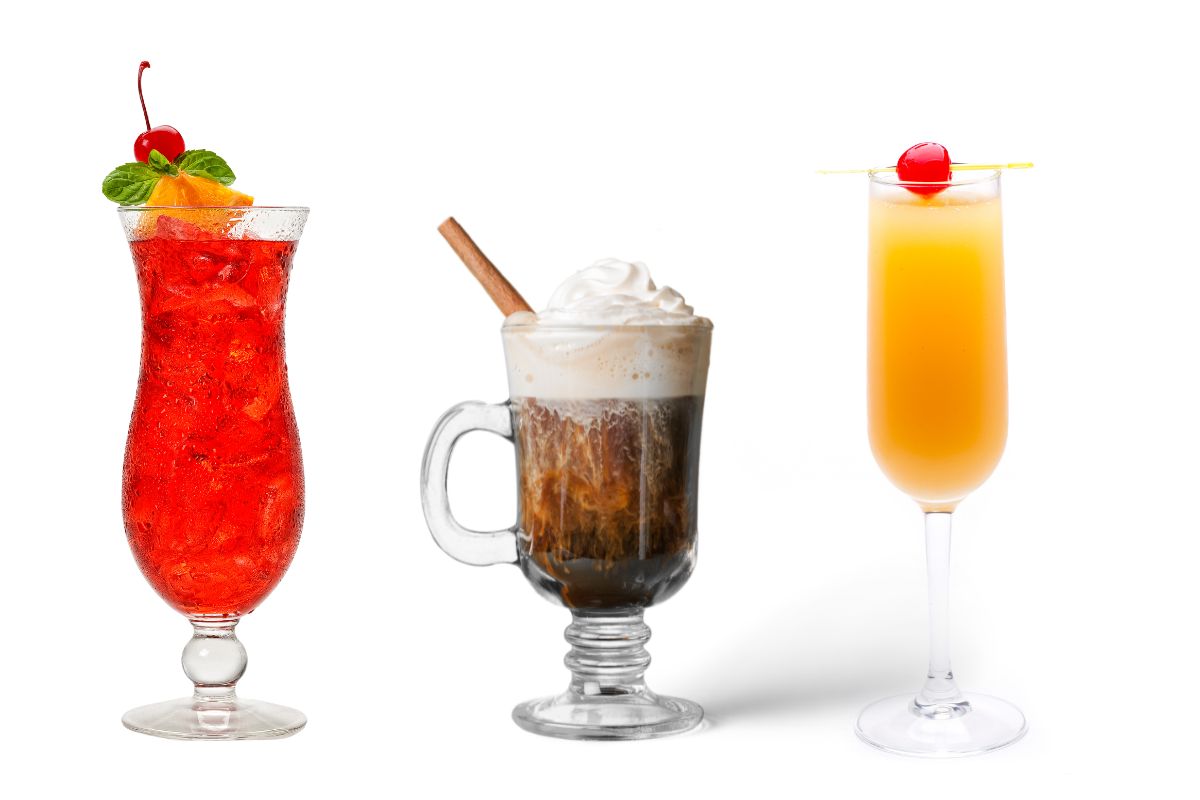
Champagne Flute. If you make French 75s, Kir Royales, or anything else that gets topped with bubbles, a flute earns its spot. The narrow shape keeps the carbonation alive longer than a wide glass would, which matters more here than in almost any other cocktail on this list. My bubbly cocktails roundup is where most of these end up, so it’s worth owning a pair if that’s a category you make often. If sparkling cocktails aren’t a regular thing for you, skip it, since a coupe does an acceptable job in a pinch.
Hurricane Glass. New Orleans’ cocktail earned its own glass: tall, curvy, and shaped like the hurricane lamps it’s named for. Lovely to own, genuinely optional. A tiki mug or a large wine glass does the job in a pinch.
Irish Coffee Glass. Always with a handle, so your hands don’t burn holding a hot drink on a cold night. Worth owning if you make hot cocktails regularly; otherwise a heatproof mug covers you.
These are the pieces I’d hold off on until the essential 10 are covered. They’re fun, but they’re the first things gathering dust on a shelf if you buy them too early.
Crystal, Tempered, or Standard: Does It Matter?
Short answer: yes, but not enough to keep you from mixing a drink tonight. Crystal is thinner, lighter, and (because it contains less lead than it used to, thanks to modern regulations) generally dishwasher-unfriendly. It’s the glass that makes a Martini feel like an occasion. Tempered glass is the workhorse: sturdier, cheaper, and built to survive being knocked around in a home bar cart. Standard soda-lime glass sits in between, fine for everyday use but the first to chip.
My rule: crystal or fine glass for the drinks you serve up (Martinis, coupes, Nick & Noras), tempered for anything with ice that’s going to see regular rotation (rocks glasses, highballs).
Riedel and Schott Zwiesel make the glass most cocktail bars actually use, and a couple of their pieces are worth the splurge because you’ll notice the difference every time you drink from them. Libbey is the budget workhorse behind a lot of professional bars too, and it’s a smart place to start if you’re building a full set on a budget. Beyond that, TK Maxx, HomeGoods, and vintage shops or Etsy sellers are where I’ve built most of my own collection, especially for Nick & Noras and coupes, since discontinued vintage shapes are often better than what’s sold new.
Common Buying Mistakes (And How to Avoid Them)
Buying a boxed set before you know what you drink. Covered above, but it bears repeating because it’s the most expensive mistake on this list.
Ignoring dishwasher safety. Crystal warps and clouds in a dishwasher, especially on a heated dry cycle. Check before you buy if you’re not planning to hand wash.
Choosing novelty over function. A tiki mug shaped like a skull is fun exactly once a month. If it’s your only rum glass, you’ll reach for a highball instead and the mug becomes a shelf decoration.
Skipping the copper. Julep cups and mule mugs get treated as optional because they’re not technically glass, but they’re some of the most-used pieces in my own collection.
Caring for Your Glassware
Crystal and fine glass don’t go in the dishwasher, full stop. Hand wash in warm water, dry immediately with a lint-free cloth, and store right side up rather than resting on the rim, which is where chips start. Tempered and everyday glasses can handle the dishwasher, but skip the heated dry cycle if you want to keep them clear rather than cloudy.
On display: glassware is one of the easiest ways to make a home bar look like a home bar rather than a kitchen shelf. Open shelving or a glass-front cabinet does more for the aesthetic than almost any other bar cart addition, and it means your good pieces get seen rather than boxed up between uses.
FAQ
What glassware do I need for my first home bar? Start with a Martini or coupe glass, a rocks glass, and a highball. That covers the vast majority of classic cocktails. Add a Nick & Nora and a copper mug once you’re mixing regularly.
How do I clean and store delicate bar glasses? Hand wash, dry immediately, and store upright rather than upside down on the rim. Keep crystal out of the dishwasher entirely.
What glass do I use for a Margarita, Daiquiri, or Old Fashioned? A margarita or coupe glass for a Margarita, a coupe for a Daiquiri, and a rocks glass for an Old Fashioned. None of these are rules you’ll be arrested for breaking.
What’s the difference between crystal, tempered, and standard glass? Crystal is finer and better for drinks served without ice; tempered is sturdier and better for everyday use with ice; standard glass sits in the middle and chips first.
What is a highball glass? A tall, straight-sided glass built for cocktails topped with soda water or another mixer, like a Tom Collins or a gin and tonic.
If you’re looking for more home bar guidance, my posts on setting up a home bar and choosing your home bar tools cover everything else you’ll need before your first pour. And if you’d rather see this glassware in action before you buy a single piece, a London Cocktail Tour will show you exactly which glass shows up with which drink, and why.