

Sometimes you just need a drink. But after watching the wizards behind the bar at your local drinking establishment, how could you even compete? Setting up a home bar might seem like a daunting prospect.
Do you really need six different spirits, three types of cocktail shaker and a collection of bitters you have no idea what to do with? Absolutely not. Trying your hand at making a few cocktails and setting up your home bar should not be intimidating. It should actually be fun!
My Lush Guide to setting up a home bar makes the whole process easy. You’ll discover which basic spirits deserve a place on your shelf, the tools and glassware you actually need, and even a few books that will help you on your way to making a simple Old Fashioned or Martini in no time.
You might not be Tom Cruise in Cocktail, but you’ll have everything you need to make a decent drink when you’re desperate. More importantly, you’ll have the beginnings of a home bar that’s built around what you actually like to drink.
THE LUSH LIFE SHORTCUT
Don’t try to build the perfect home bar overnight. Start with the spirits you love, add a few bottles that turn them into cocktails, buy the basic tools and some decent glassware, and make sure there’s always ice in the freezer. The rest can come later.
How to Set Up a Home Bar
First things first: what do you actually drink? This sounds obvious, but there’s no point buying vodka because a list on the internet tells you every home bar needs vodka if you never drink the stuff.
Think instead about the cocktails you order when you’re out. Martini person? Start with gin or vodka and vermouth. Margarita lover? Tequila and orange liqueur are going to be much more useful. If an Old Fashioned is your idea of heaven, begin with a good bourbon or rye, bitters and sugar.
Your home bar should be filled with bottles you actually want to open.
At its simplest, you need just a few things:
- Spirits
- Liqueurs, vermouths and bitters
- Mixers and fresh ingredients
- A few cocktail tools
- Glassware
- Lots of ice
Start With the Spirits
Now for the fun part.
There is no law stating that a home bar must contain gin, vodka, rum, tequila, whiskey and brandy from day one. Start with two or three spirits you genuinely like and build from there.
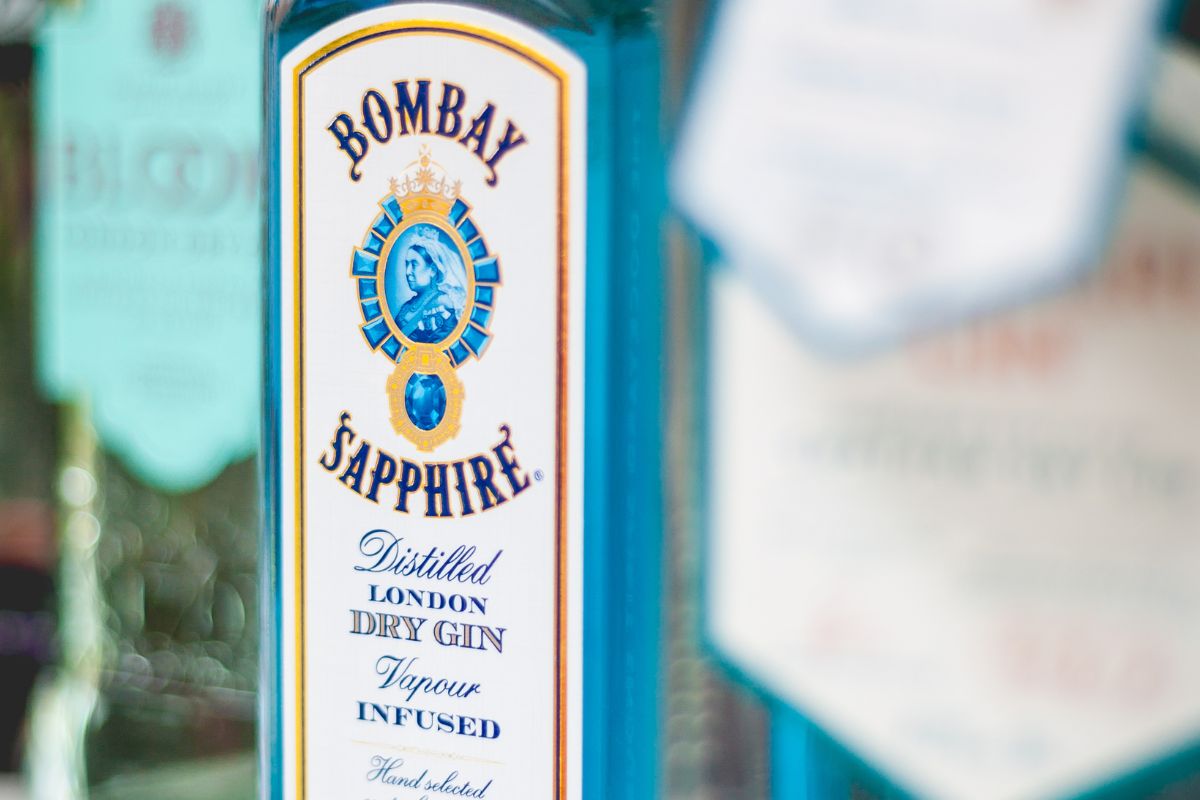
Gin is a brilliant place to start if you’re a fan of the classics. Add a few other ingredients and you can make a Martini, Negroni, Gimlet, Tom Collins and Gin Fizz.
If whiskey is more your thing, bourbon or rye will set you up for an Old Fashioned, Manhattan, Whiskey Sour and Boulevardier.
Tequila means Margaritas and Palomas are within reach, while rum gets you started with the Daiquiri and opens the door to the very large, very fun world of tropical cocktails.
Vodka, meanwhile, earns its place if you love an Espresso Martini, Cosmopolitan, Moscow Mule or Bloody Mary.
Once you’ve mastered the basics, that’s when you can start adding Scotch whisky, Cognac, mezcal, Calvados, pisco, cachaça, Japanese spirits and all those bottles you discover on your travels and somehow convince yourself you absolutely need.
Not sure where to begin? Head to my Lush Guide to Spirits, where you’ll find everything from gin and whiskey to brandy, amaro, Asian spirits and low-and-no.
Don’t Forget the Supporting Cast
Some of the most useful bottles in your home bar aren’t actually base spirits at all. They’re the vermouths, liqueurs, aperitivi and bitters that turn your favorite spirit into a cocktail.
Dry vermouth is essential for a Martini, while sweet vermouth gets you well on your way to a Manhattan or Negroni. One important thing about vermouth: once you’ve opened it, put it in the fridge.
Vermouth is wine. Leaving an open bottle sitting on your bar for months and then wondering why your Martini tastes terrible isn’t going to end well.
Next, I would add an orange liqueur if Margaritas, Sidecars and Cosmopolitans feature heavily in your cocktail plans.
A bottle of Campari is another hardworking addition. Suddenly you have the Negroni, Americano, Boulevardier and Garibaldi at your fingertips.
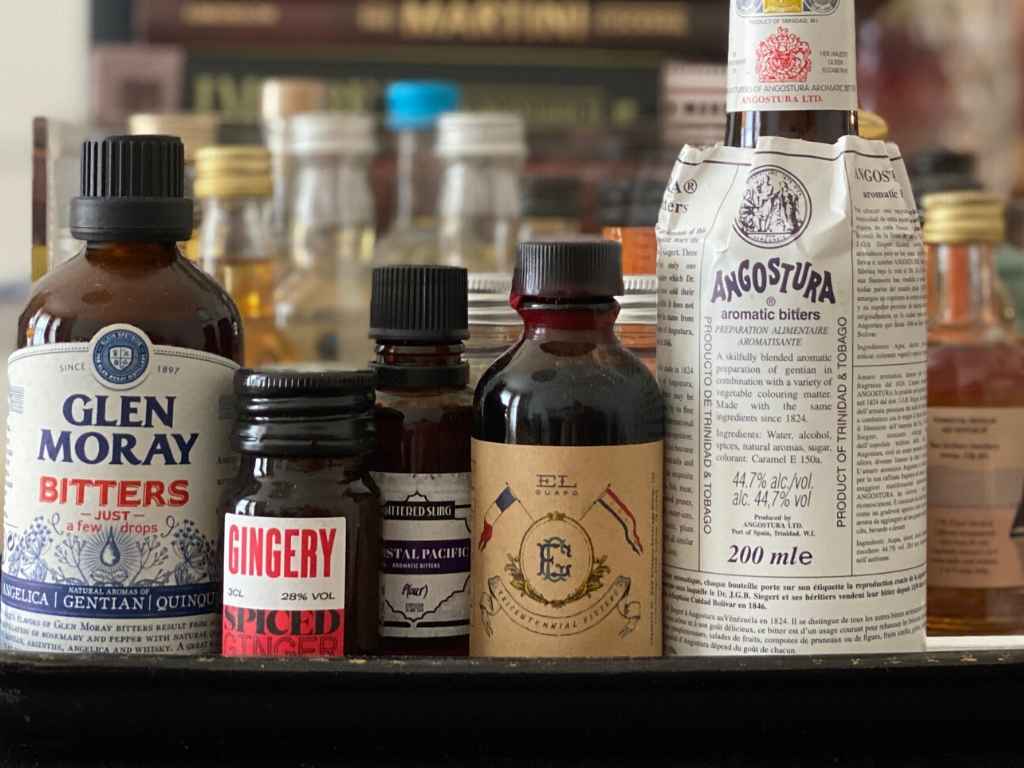
Then buy some Angostura bitters. The bottle may be small, but a few dashes appear in an extraordinary number of classic cocktails.
This is also the point at which things can start getting slightly out of hand. You buy your first amaro. Then another. Then you discover there are hundreds of them.
Don’t say I didn’t warn you.
What Mixers Should You Have at Home?
There is absolutely no need to turn your refrigerator into the drinks aisle of a supermarket.
Buy mixers according to what you actually drink.
A few useful ones are:
- Tonic water
- Soda water
- Ginger beer
- Cola
I prefer smaller bottles or cans where possible. Nobody wants a Gin & Tonic made with tonic that’s been open since Tuesday.
Then you need the fresh stuff.
Lemons and limes will probably be your hardest-working ingredients, with oranges useful for both juice and garnishes.
Keep sugar around for making simple syrup, plus olives if you’re a Martini fan and proper cocktail cherries if you love an Old Fashioned or Manhattan.
Fresh citrus makes a huge difference to a cocktail. If the recipe asks for fresh lime juice, squeeze a lime. That little plastic lime-shaped bottle lurking at the back of the refrigerator doesn’t count.

The Cocktail Tools You Actually Need
Walk into a barware shop and you could be forgiven for thinking you need to remortgage the house before you can make a Daiquiri. You don’t.
A few good tools will get you surprisingly far:
- Jigger – got it be able to measure it
- Stirrer – the fancy word for a bar spoon
- Mixing Glass – can’t have the martini without one
- Shaker – Shake, Shake, Shake
- Strainer – can’t have the ice coming through
- Muddler – a smusher to get oils and juice
- Ice tray – it’s got to be cold
- Bottle Opener – self-explanatory
Of these, I would put the jigger right near the top of the list. Yes, professional bartenders sometimes look as if they’re casually pouring ingredients into a shaker without measuring anything. You are not there yet.
Cocktails are recipes and proportions matter. Once you’ve made your 500th Margarita, we can revisit the conversation.
I’ve gone into much more detail in my Lush Guide to Essential Cocktail Tools, including what everything does and what you can probably live without.
Which Cocktail Shaker Do You Need?
The shaker is probably the piece of cocktail equipment most associated with bartending, so of course there isn’t just one type. That would be far too easy.
You’ll generally encounter three: the Boston shaker, Cobbler shaker and French or Parisian shaker.
The Boston shaker is the one you’ll see behind many professional bars. It’s made from two pieces fitted together and is quick and efficient once you get the hang of it.
The Cobbler shaker comes in three pieces and has a strainer built into the top, which makes it an appealing choice if you’re just starting out.
The French shaker is, unsurprisingly, rather elegant.
Which one should you buy? The one you actually enjoy using.
I’ve broken down all the differences in my Lush Guide to Cocktail Shakers.

What Cocktail Glasses Do You Really Need?
This is dangerous territory for me because I love cocktail glasses.
The good news is that you don’t need dozens of different styles to set up a home bar.
Start with a few useful shapes.
Rocks or Old Fashioned glasses are for short drinks served over ice.
Highball glasses take care of long drinks such as the Tom Collins, Mojito and Paloma.
For cocktails served without ice, I would add either coupes or Nick & Nora glasses. They’ll happily accommodate everything from a Daiquiri to a Manhattan.
Then there are wine glasses, which are useful for far more than wine. Spritzes immediately spring to mind.
That’s more than enough to get you started.
Of course, once you begin noticing beautiful glassware, all bets are off. Vintage glasses are one of my favorite ways to add personality to a home bar and I see absolutely no reason everything has to match.
Want to know your coupe from your Collins? Head to my Lush Guide to Cocktail Glassware.
Ice, Ice Baby
Yes, ice gets its own section because ice is an ingredient.
It doesn’t just make your cocktail cold. When you shake or stir a drink, some of that ice melts, adding exactly the dilution the cocktail needs.
The most important thing is to have plenty of it.
If you’re making cocktails for friends, fill the freezer beforehand. There is nothing worse than discovering you have six cubes left when everyone suddenly decides they want Margaritas.
For an Old Fashioned or another spirit-forward drink served on the rocks, larger cubes are useful because they melt more slowly. They also look fabulous.
Do you need to start hand-carving crystal-clear blocks of ice in your kitchen? No.
Unless you want to, of course. This is how these things start.
Where Should You Put Your Home Bar?
You don’t actually need a bar to have a home bar.
A drinks trolley is lovely, but a shelf, cupboard, sideboard or little corner of the kitchen works perfectly well.
Keep the bottles you use most often somewhere accessible, with your tools nearby. I like grouping similar bottles together simply because it makes finding things easier when you’re halfway through making a drink.
Keep your bottles away from heat and strong sunlight and, once again for those at the back, opened vermouth goes in the refrigerator.
Your glassware should also be somewhere reasonably easy to reach. Making a Martini shouldn’t require a stepladder.
The Cocktail Books Every Home Bar Needs
You have the bottles. You have the shaker. You have the glasses. Now you need to know what to do with them.
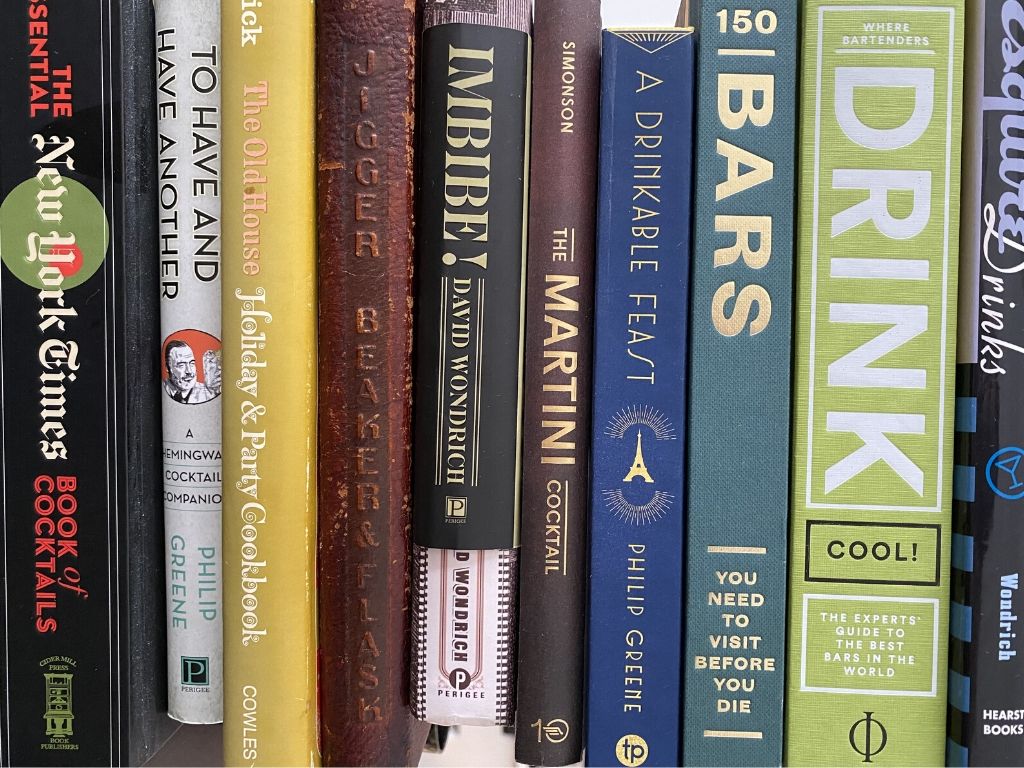
Years ago, when Lush Life was launched, I asked one of my favorite bartenders what books would start me on my way to better cocktail making – he recommended three classic in the cocktail oeuvre: David Wondrich’s Imbibe, Dale De Groff’s the Art of the Cocktail and Gary Regan’s Art of Mixology.
With those in my library, I was on my way to understanding what a cocktail was and what a cocktail could be. Once you’ve devoured those, head down to your local bookstore to check out the tons of new titles on the shelf. Please check out my bookstore here for all the latest titles.
A good cocktail book is one of the best investments you can make when you’re learning to mix drinks at home. Start with a book that teaches you the classics and explains why you’re doing what you’re doing rather than simply giving you hundreds of recipes.
As you become more confident, you can start exploring books devoted to particular spirits, bars, techniques and cocktail history. Soon you’ll have an entire shelf of them and tell everyone they’re “for reference.”
If you are stumped on the jargon used on the recipes, you can find out how to understand Bartending Terminology here.
Now Go Make a Cocktail!
There is no such thing as a bad drink. Well, maybe there is BUT how can you make a better Martini, if you’ve never even made one. So read your books, buy your shaker and bash about your kitchen making syrups, then invite over a few folks and start shaking.
Check out my Cocktail Recipe page for all the classics and more
A Few Home Bar Mistakes to Avoid
The biggest mistake is buying too much too quickly. You don’t need 30 bottles before you’ve learned what to do with five. Start small and let your bar grow according to the cocktails you discover.
The same applies to equipment. You don’t need every gadget you’ve seen a bartender use on Instagram.
Keep your ingredients fresh, especially citrus and vermouth. Don’t use flat mixers. Have plenty of ice.
Most importantly, measure your drinks.
Once you understand how a cocktail is supposed to taste, start experimenting. Swap the gin for mezcal. Try a different vermouth. Discover an amaro you’ve never heard of.
That’s when making cocktails at home becomes really fun.
Ready to Set Up Your Home Bar?
The best home bar isn’t necessarily the one with the most bottles or the fanciest equipment. It’s the one that has everything you need to make the drinks you love.
Start with a couple of spirits. Add the liqueurs, vermouths and bitters you need to turn them into cocktails. Buy a decent shaker and jigger, find a few glasses you love and make sure there’s ice in the freezer.
Then make yourself a drink.
Before you know it, you’ll be eyeing up vintage coupes, discussing the merits of different vermouths and wondering whether you really need another bottle of amaro.
The answer, I’m afraid, is probably yes.
Wow! So many great tips here. Love the photos!!