
You have the spirits. You have the mixers. You’ve bought the shaker, jigger and all those lovely glasses. Now you actually have to make the cocktail.
Thankfully, you don’t need to train as a professional bartender to make great drinks at home. Most cocktails rely on a surprisingly small number of techniques and, once you understand when to shake, when to stir and why you’re doing either, everything starts to make a lot more sense.
My Lush Guide to cocktail techniques and skills takes you through the basics every home bartender should know. Master these and you’ll be well on your way to making everything from a Daiquiri to a Martini without breaking into a sweat.
THE LUSH LIFE SHORTCUT
Measure everything, use plenty of ice, shake drinks containing juice and stir spirit forward cocktails. Taste as you go, use fresh ingredients and don’t worry about looking like a professional bartender. Making a delicious cocktail is considerably more important than looking fabulous while doing it.
Learn to Measure a Cocktail
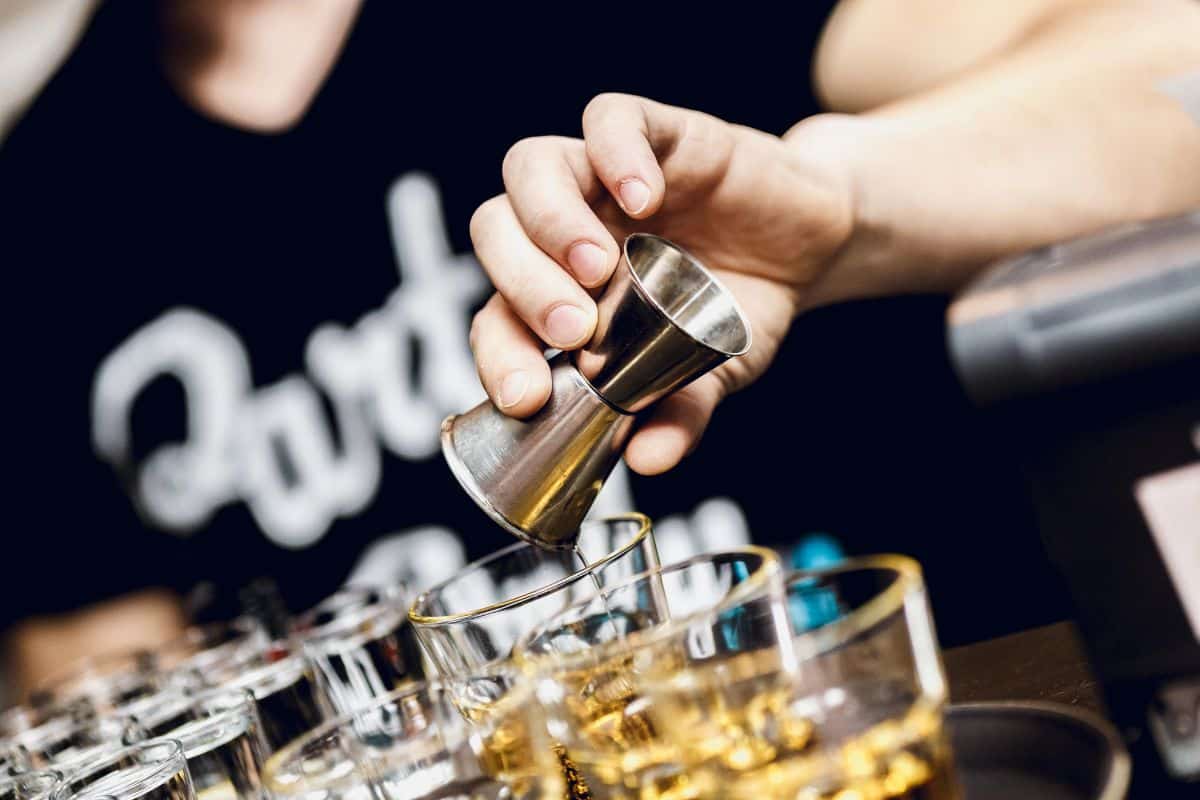
Before we shake or stir anything, we need to measure it. Cocktails are recipes. If a recipe calls for 2 oz gin, 1 oz lemon juice and ¾ oz simple syrup, those proportions are there for a reason. Pouring everything enthusiastically into a shaker and hoping for the best is unlikely to produce the same cocktail twice.
That’s where your jigger comes in. Measure each ingredient carefully, particularly when you’re learning. After your 5,000th Daiquiri you may develop the bartender’s uncanny ability to judge a pour by eye, but until then there’s absolutely no shame in using the equipment designed specifically for the job.
Learn more: Head to my guide to essential home bar tools to find the tools you actually need.
How to Shake a Cocktail
This is the technique everyone associates with making cocktails, and thankfully it’s not particularly complicated. Shaking chills the drink, combines the ingredients, adds dilution and introduces air. Cocktails containing citrus juice, fruit, dairy, egg white or other ingredients that need to be properly combined are generally shaken.
Fill your shaker generously with ice, seal it and shake firmly. You don’t need elaborate choreography. You’re trying to chill and combine the drink, not audition for Cocktail 2.
How long should you shake? There’s no magical number, but somewhere around 10 to 15 seconds is a useful starting point. You’ll feel the outside of a metal shaker become extremely cold.
If you’re wondering which shaker you should be using, my guide to choosing a cocktail shaker explains the differences between Boston, Cobbler and French shakers.
How to Stir a Cocktail
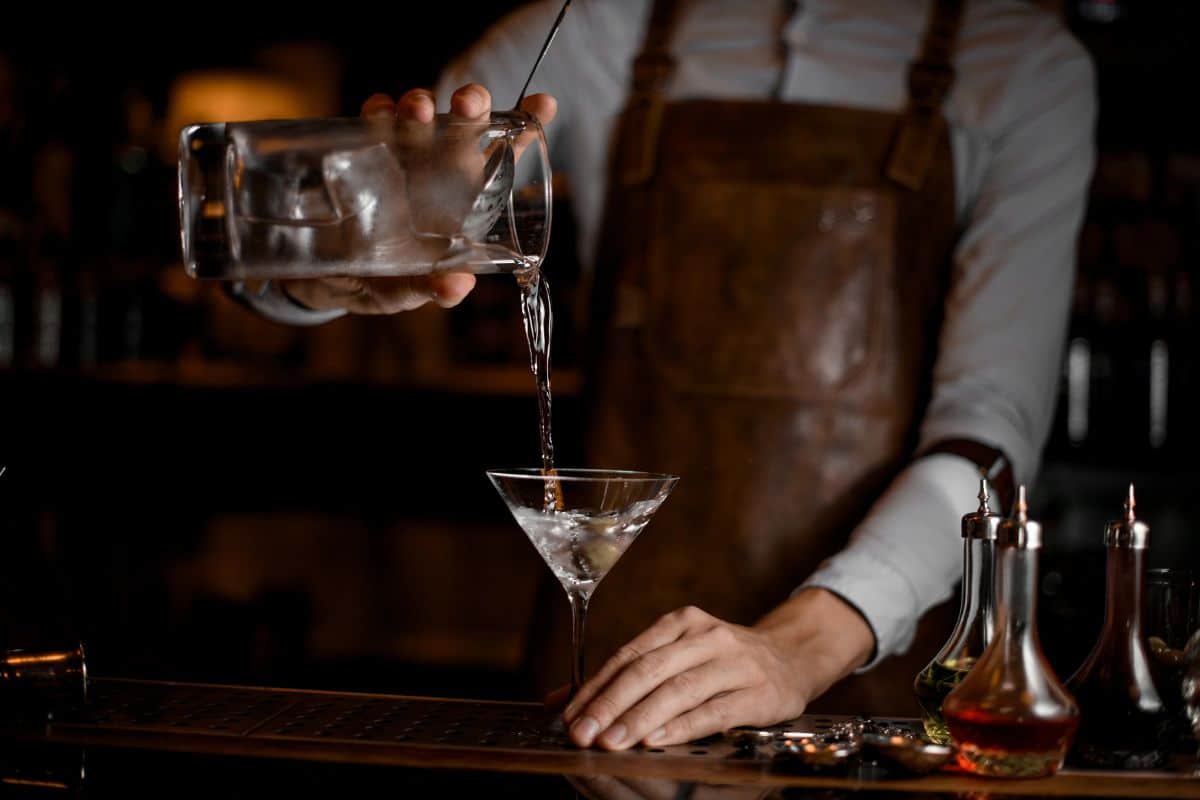
If shaking is Tom Cruise, stirring is rather more James Bond. Although, ironically, we all know what Bond demanded for his Martini. Stirring is generally used for spirit forward cocktails containing ingredients that combine easily, such as the Martini, Manhattan and Negroni. The aim is to chill and dilute the cocktail while keeping its silky texture rather than aerating it through shaking.
Add your ingredients to a mixing glass, fill it generously with ice and use a bar spoon to move the ice smoothly around the glass. You’re not whisking it. The movement should be controlled and surprisingly quiet.The more you practice, the easier it becomes.
Learn by making: Try the technique with a Martini, Manhattan or Negroni.
Shaken or Stirred?
This is one of the great cocktail questions, but there’s a very easy rule of thumb. If the drink contains mainly spirits, vermouths or liqueurs, it’s usually stirred. If it contains citrus, fruit juice, cream, egg or other ingredients that need a bit more persuasion to come together, it’s usually shaken.
There are exceptions, of course. Cocktails wouldn’t be nearly as much fun if everyone agreed on everything.The recipe will normally tell you which technique to use, so when you’re starting out, trust it.
How to Strain a Cocktail
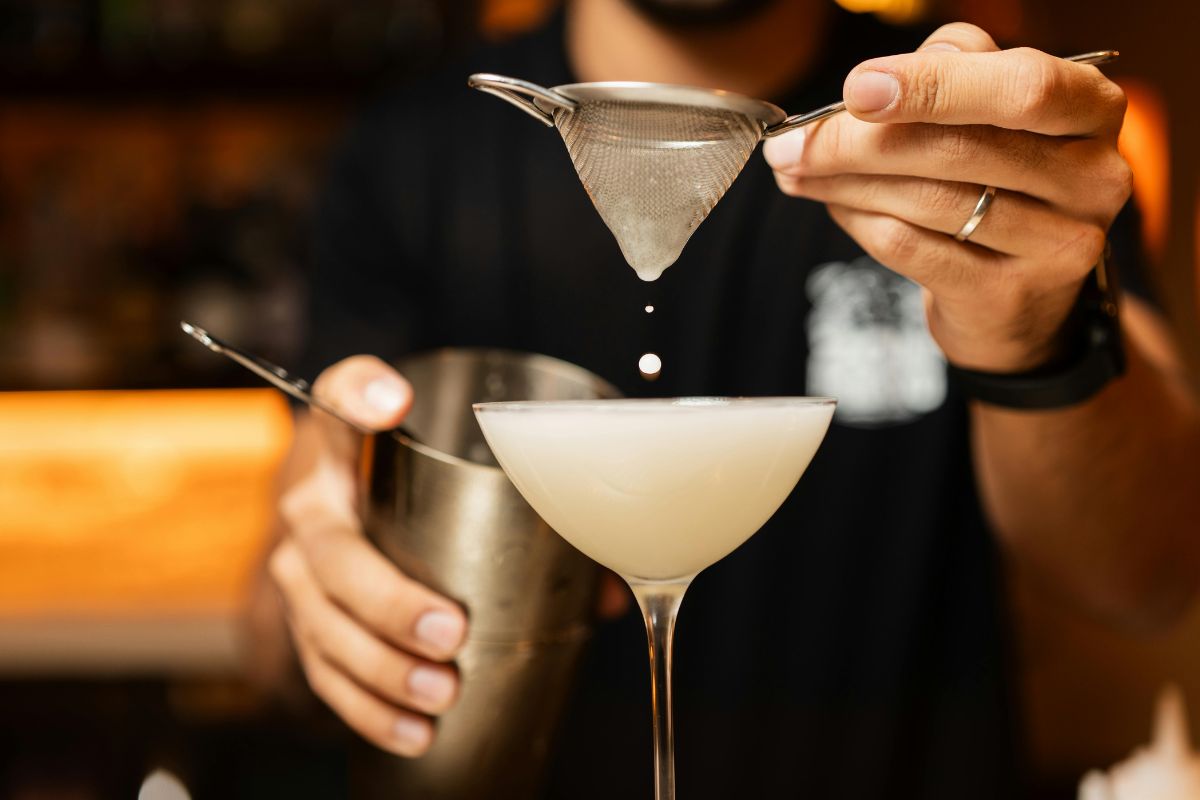
Once you’ve shaken or stirred your cocktail, you usually need to separate the liquid from the ice. A Hawthorne strainer is most commonly used with a cocktail shaker, while a Julep strainer is traditionally associated with stirred drinks and mixing glasses. Your Cobbler shaker may already have a strainer built into its lid.
Then there’s double straining. This simply means pouring the cocktail through your regular strainer and a fine mesh strainer at the same time. It catches tiny pieces of ice, herbs, fruit or anything else you don’t want floating around in the finished drink.
You’ll use this technique particularly often with cocktails containing muddled ingredients or fresh fruit.
How to Muddle
Muddling sounds wonderfully professional but essentially means gently pressing ingredients to release their flavor.
The key word is gently. Mint doesn’t need to be pulverized into green mush to make a Mojito. A few gentle presses release its aromatic oils without extracting too much bitterness, while fruit can usually take a little more force. You’ll encounter muddling in Mojitos, Mint Juleps, Caipirinhas and plenty of modern cocktails.
If you’re choosing a muddler for your home bar, read my guide to cocktail muddlers.
How to Build a Cocktail in the Glass
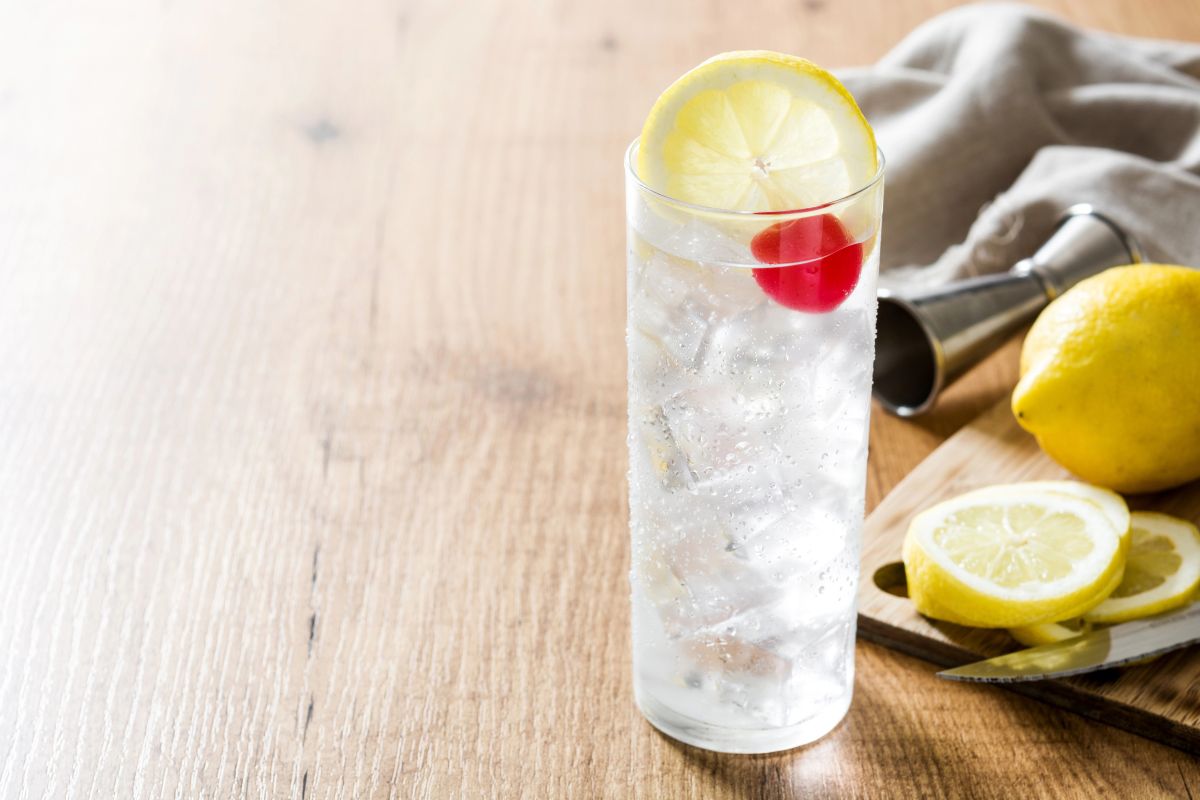
Here’s a technique we can all get behind: sometimes you barely have to do anything. A built cocktail is made directly in the glass in which you’re going to serve it. Add the ingredients, add ice and give everything a stir if required.
The Gin & Tonic, Highball, Americano and many other long drinks can be built directly in the glass. It makes them particularly useful when you’re making drinks for several people because you’re not washing a shaker after every round. Simple doesn’t mean careless, though. You still need to measure your ingredients and use plenty of fresh ice.
What Does “Top With” Mean?
You’ll see this phrase constantly in cocktail recipes. If a recipe tells you to “top with soda,” it means you make the main part of the drink first and then add the soda to fill or finish the drink.
Carbonated ingredients usually go in towards the end so you don’t lose all those lovely bubbles while mixing. Whatever you do, don’t shake them. A shaker containing a carbonated mixer is essentially a small cocktail grenade.
How to Roll a Cocktail
Rolling is a gentler way of mixing a drink. Rather than shaking it, you pour the cocktail backwards and forwards between two vessels. The Bloody Mary is probably the most famous example. Tomato juice can become overly aerated when shaken vigorously, so rolling combines everything without changing its texture too much. It’s not a technique you’ll use every day, but it’s a useful one to know.
Understanding Ice and Dilution
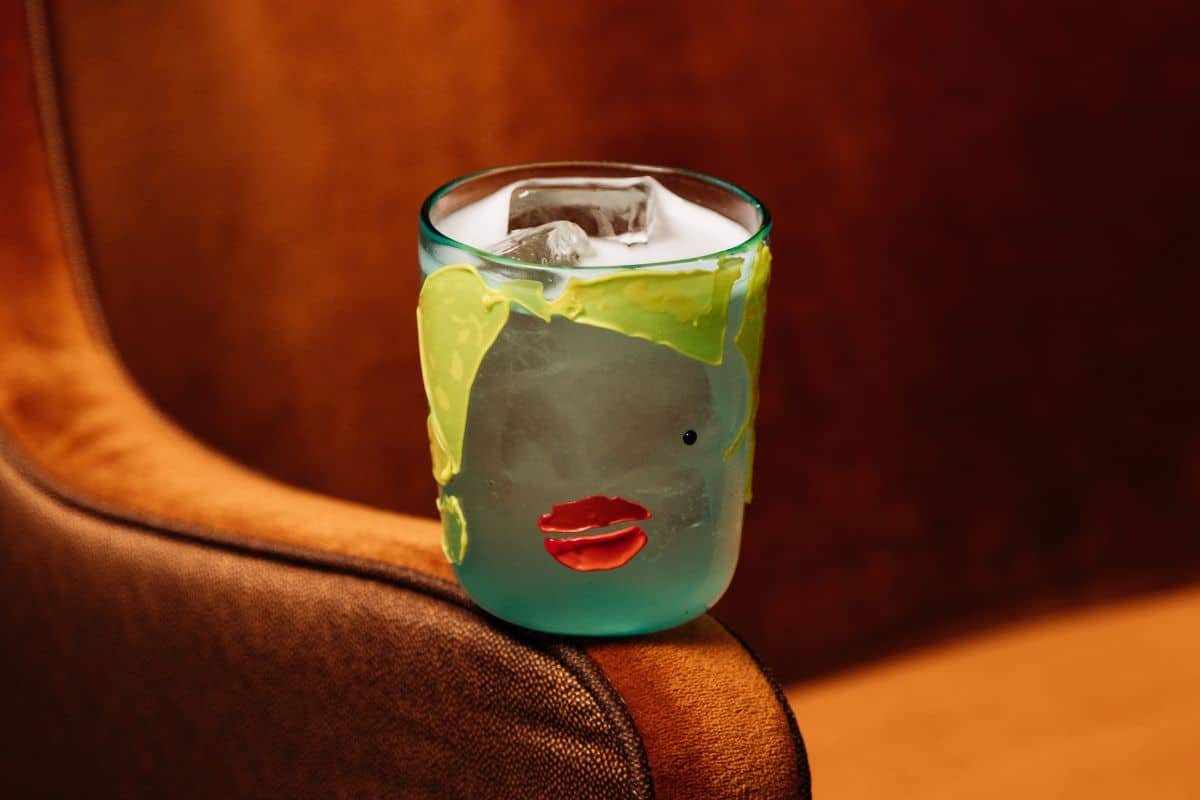
Ice isn’t merely there to make your cocktail cold. Ice is an ingredient. As you shake or stir, the ice melts and adds water to the cocktail. That dilution is part of the finished recipe and helps soften alcohol, integrate flavors and create balance.
Use plenty of good, fresh ice when shaking and stirring. A shaker containing only three lonely cubes will warm and dilute differently from one properly filled with ice. For drinks served on the rocks, larger cubes melt more slowly and are particularly good for spirit forward cocktails such as the Old Fashioned.
Learn more: My Home Bar Mixers & Ingredients covers ice alongside the other essentials worth keeping around.
How to Rim a Glass
Salt on a Margarita is probably the best known example of a cocktail rim, but sugar, spices and flavored salts can all be used.
First, moisten the outside edge of the glass with a citrus wedge, then gently dip or roll it in your chosen salt or sugar. Try not to get too much on the inside of the glass. You want the garnish to accompany the drink rather than dissolve into it.
I particularly like doing only half the rim. It gives whoever is drinking the cocktail the choice of having each sip with or without salt.
How to Garnish a Cocktail
A garnish isn’t simply there to make the finished drink look pretty. Take a strip of orange peel and twist it over an Old Fashioned and you’ll see tiny droplets of citrus oil released over the surface. Those oils affect the aroma of the cocktail before you’ve even taken a sip.
Citrus twists, wedges, olives, cocktail cherries, herbs and even spices can all finish a drink. The recipe will usually tell you what you need. Don’t overcomplicate things. One beautiful lemon twist is infinitely preferable to a fruit salad balanced precariously on top of your Martini.
Learn more: My Home Bar Mixers & Ingredients covers the garnishes worth keeping around.
Learn to Taste Your Cocktails
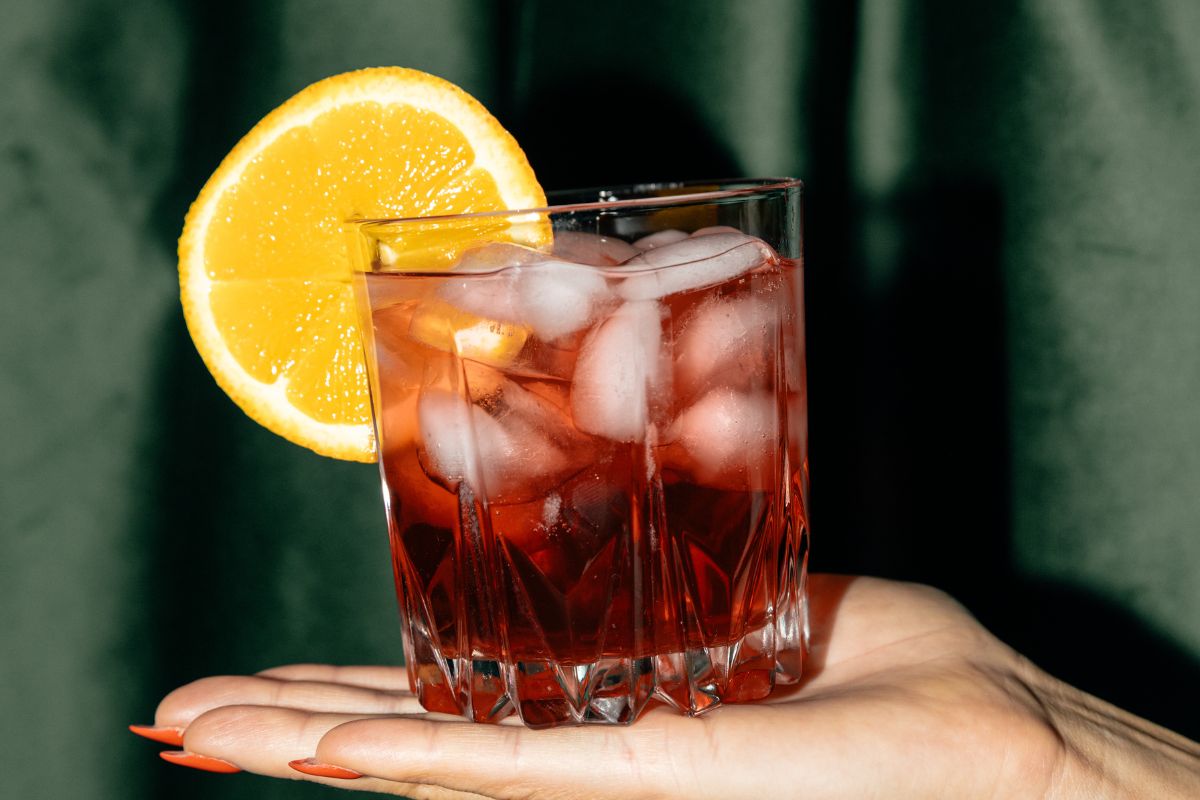
This might be the most important skill on the entire page. Taste what you’re making. Is it too sour? Too sweet? Too strong? Has the ice diluted it enough? Can you actually taste the spirit?
Cocktail recipes give you the starting point, but ingredients vary. One lemon may be sharper than another. Different brands of vermouth have different levels of sweetness. Even your ice affects the finished drink. The more cocktails you make and taste, the better you’ll become at recognizing when something is balanced. That’s when you stop simply following recipes and start understanding them.
Common Home Bartending Mistakes
The first is not measuring. We’ve covered this already, but I’m saying it again because it matters. The second is being stingy with ice. Use plenty when shaking and stirring, and always use fresh ice in the serving glass if the recipe calls for it.
Another common mistake is shaking everything. Your Manhattan doesn’t need the same treatment as your Margarita. Learn the difference between shaking and stirring and you’re already halfway there. Fresh ingredients matter too. Freshly squeezed lime juice will improve your Daiquiri more than buying an expensive new shaker ever will.
Finally, don’t become so obsessed with technique that you forget you’re making a drink. Cocktails are supposed to be enjoyed.
The Cocktail Skills to Master First
You don’t need to learn everything at once. If you’re new to making cocktails at home, I’d tackle the basic techniques in this order:
- Measuring: Learn to use your jigger.
- Shaking: Start with a Daiquiri or Margarita.
- Stirring: Move on to a Negroni or Martini.
- Straining: Learn the basic strain before trying a double strain.
- Building: Master a good Highball or Gin & Tonic.
- Muddling: Make a Mojito or Caipirinha.
- Garnishing: Learn to cut and express a proper citrus twist.
Once those feel natural, rolling, layering, throwing and all the other bartender tricks can come later.

Put Your New Skills to Work
The only real way to get better at making cocktails is to make cocktails. Terrible hardship, I know.
Start with recipes that teach you one technique at a time. A Daiquiri teaches shaking and balance, an Old Fashioned introduces stirring and dilution, while the Martini will make you think about temperature, dilution and garnish all at once.
Head to my Cocktail Recipes and choose something you actually want to drink. The more you make, the more instinctive all of this becomes.
If you’re still building your home bar, you can also explore my How to Set Up a Home Bar, How to Stock Your Home Bar, Essential Home Bar Tools and Home Bar Mixers & Ingredients.
Before long, you’ll stop wondering whether you should shake or stir and just reach for the right tool. That’s when you know you’re getting somewhere.