
The Widow’s Kiss first appeared in print in 1895, in George J. Kappeler’s Modern American Drinks, one of the earliest American cocktail books and a document of just how sophisticated bar culture had become before Prohibition.
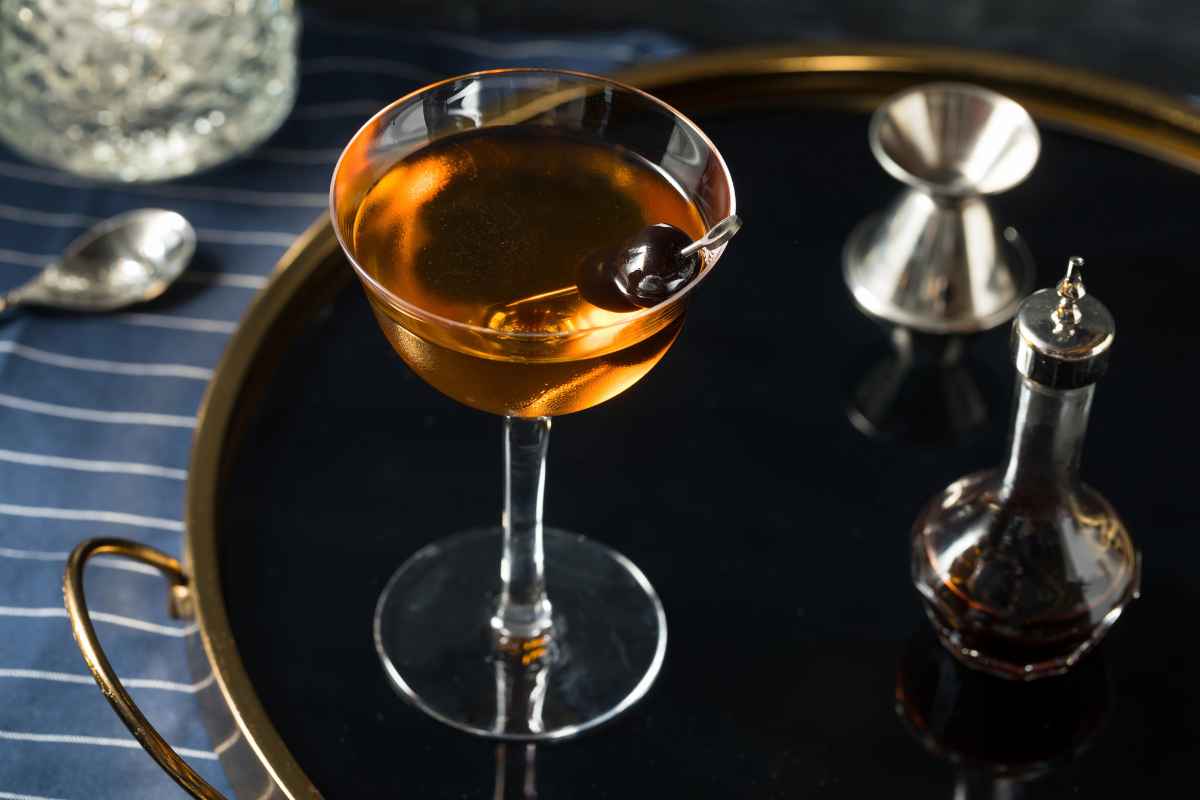
Kappeler was headwaiter at the Holland House hotel in New York, serving a Gilded Age clientele who expected their drinks to be as considered as everything else on the table, and the Widow’s Kiss is proof of it. Two French liqueurs, an apple brandy base, and a name nobody has ever fully explained.
Some say it’s about the drink’s deceptive strength. Others suspect Kappeler simply liked a good, slightly morbid pun. Either way, it’s one of the most purely delicious things to come out of the pre-Prohibition era, and one of the least ordered.
A note on the balance
This is a rich drink by design, and the two liqueurs are doing very different jobs. Yellow Chartreuse brings herbal, slightly floral sweetness, while Bénédictine adds honey and spice underneath it. The apple brandy has to be good enough to hold its own against both, so this is not the place to reach for anything thin or one-note. A proper Calvados with some age on it changes the whole drink.
Why Lush Life Loves It
It’s unapologetically sweet and herbal in a way modern drinks rarely are, and it tastes like autumn even when it’s the middle of July. There’s also something satisfying about a drink this good sitting almost entirely forgotten for over a century.
Variations Worth Trying
- Green Chartreuse swap. Using green instead of yellow Chartreuse pushes the drink drier and more intensely herbal, less honeyed and softer. A different drink, but a good one.
- Bourbon Widow’s Kiss. Some modern bars swap the apple brandy for bourbon, trading the orchard fruit for oak and vanilla. Worth trying if Calvados isn’t in your cabinet.
- Smoky Widow’s Kiss. A small measure of a peated Scotch in place of a portion of the brandy adds a smoky edge that plays surprisingly well against the honeyed liqueurs.
- Widow’s Kiss Sour. Adding ¾ oz lemon juice and a touch of simple syrup, then shaking instead of stirring, turns it into a brighter, more sessionable version for warmer weather.
FAQ
What does a Widow’s Kiss taste like?
Rich, herbal, and honeyed, with the apple brandy’s fruit sitting underneath rather than up front. It drinks closer to a digestif than a typical stirred cocktail.
Can I make it with regular brandy instead of Calvados?
You can, though you’ll lose the apple character that gives the drink its name and its identity. If you’re substituting, a good French brandy will work better than something neutral.
Why is Bénédictine so hard to place in a home bar?
It’s a spiced, honeyed French liqueur with a long monastic history, and it turns up across a lot of pre-Prohibition classics, including the Vieux Carré. One bottle goes a long way once you start exploring this era of cocktails.
Is this a strong drink?
Yes, deceptively so. There’s no citrus or dilution beyond the stir, and both liqueurs are around 40 percent ABV, so it drinks smoother than its strength suggests.
More Classics to Try
For more from this era of quietly excellent, mostly forgotten cocktails, the Vieux Carré shares the same layered, spirit-forward approach. If you want to stay in apple brandy territory, the Sidecar shows what Calvados’s cousin, cognac, can do in a citrus-forward drink instead. And if Chartreuse intrigues you, the Last Word is the other great showcase for it.
Here is the recipe
Widow’s Kiss
Equipment
Ingredients
- 1½ ounce Calvados
- ¾ ounce Yellow Chartreuse
- ¾ ounce Bénédictine
- 2 dashes Angostura bitters
- Garnish: candied cherries
Instructions
- Pour Calvados, Chartreuse, Benedictine, and bitters into a mixing glass and fill with ice.
- Stir briskly for 30 seconds
- Strain into a chilled cocktail glass.
- Garnish with a cherry.