
Once upon a time, if you wanted a proper cocktail, someone had to make it for you. There was measuring, shaking or stirring, ice to consider and, depending on your order, perhaps a garnish or two. Today, you can open the fridge, pull out a can and have everything from a Margarita to an Espresso Martini ready in seconds.
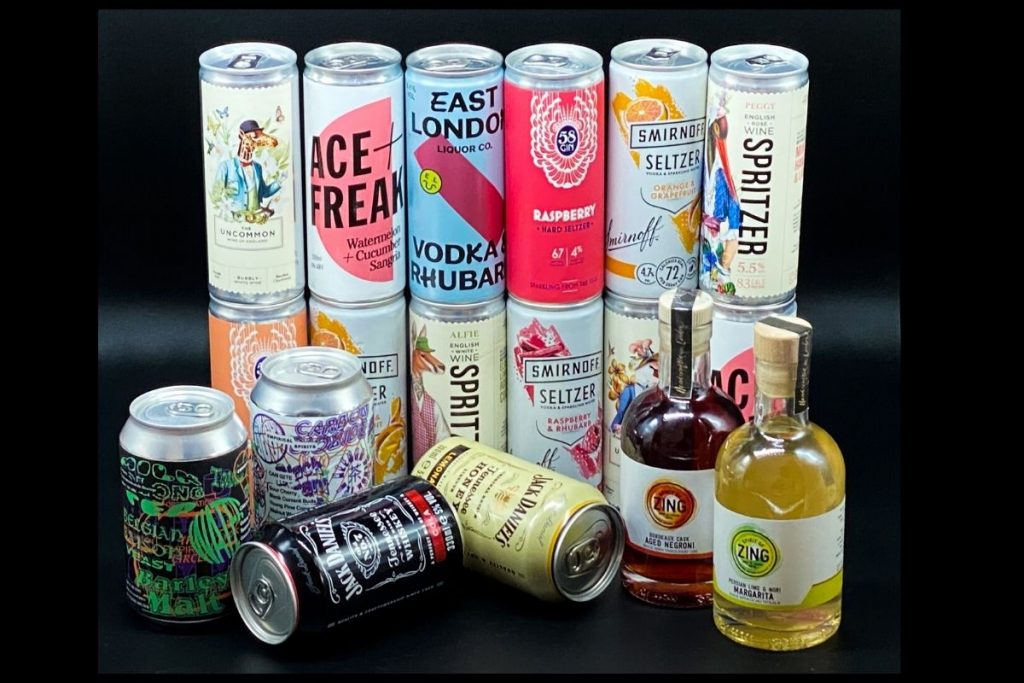
Canned cocktails, or RTDs as they are known in the drinks industry, have become a serious part of the cocktail world. The category has also become rather confusing. Hard seltzers, spirit and mixers, wine-based drinks and actual cocktails can all occupy the same bit of supermarket real estate, although what is inside those cans can be very different.
So what exactly is a canned cocktail, where did the idea come from and, most importantly, can one ever be as good as a cocktail made at a bar?
What is a canned cocktail?
RTD stands for ready-to-drink, a broad category covering alcoholic drinks that arrive already mixed and ready to serve. IWSR separates RTDs into several categories, including hard seltzers, wine spritzers, flavored alcoholic beverages and cocktails or long drinks. The latter includes recognizable cocktails such as the Negroni and Mojito, as well as familiar combinations such as Gin & Tonic and Vodka Soda. (IWSR)
That distinction is worth remembering when you are standing in front of a wall of brightly colored cans. Something labeled Margarita may be made with tequila, but another Margarita-style drink might use a different alcohol base altogether. Checking the label for the base spirit and ABV will tell you much more about what you are about to drink than the picture of a lime on the front.
This is particularly relevant in the United States, where taxation has historically helped malt-based products dominate parts of the RTD market. That is changing as drinkers increasingly seek out products made with recognizable spirits. (IWSR)
Canned cocktails aren’t as new as you think
Here is where things get interesting. We tend to think of the canned cocktail as a thoroughly modern invention, but our desire to have somebody else make the cocktail for us is considerably older than the aluminum can.
Cocktail historian David Wondrich traces commercially sold bottled cocktails back to the mid-19th century, when American bars could sell bottles of mixed drinks for customers to take away. By the 1890s, Heublein’s Club Cocktails had taken the idea much further, turning pre-mixed cocktails into nationally distributed products. Other brands followed, and by the beginning of the 20th century ready-made cocktails could be bought far beyond the bars where they had originated. (Consumer Reports)
Heublein’s advertising was wonderfully confident. The company essentially promised that its bottled version could provide a better cocktail at home than you might be served at a bar. (Smithsonian Magazine) More than a century later, canned cocktail companies are still trying to persuade us of pretty much the same thing.
The modern can came later, of course, but even that has more history than you might expect. Marks & Spencer introduced canned cocktails in the UK in 1986, beginning with a Gin & Tonic. (Decanter) The Instagram-friendly canned cocktail may look very 21st century, but the idea behind it certainly isn’t.
Why did canned cocktails suddenly become so popular?
Convenience is obviously part of the appeal, but it isn’t the whole story. The huge growth of hard seltzers helped introduce consumers to a much wider RTD category, while improvements in ingredients and production allowed companies to create increasingly sophisticated spirit-based drinks.
The numbers show just how much things changed. RTDs accounted for less than 3% of the US beverage alcohol market by volume a decade before 2023; by 2022 that had grown to almost 12%. The market has matured since the extraordinary growth years, but IWSR has found consumers increasingly trading toward spirit-based cocktails and fuller flavors. (IWSR)
Then there is the simple matter of where we drink. A canned cocktail can go to a picnic, festival, barbecue, beach or train journey without requiring you to pack a cocktail shaker, bottles, jigger and bag of ice. Sometimes you also just want one Margarita without buying tequila, triple sec and a bag of limes.
What’s actually inside a canned cocktail?
Making a good canned cocktail is not simply a matter of taking a bar recipe, multiplying it by 10,000 and pouring it into cans. A producer has to think about dilution, acidity, sweetness, carbonation, stability and how those flavors will change over time.
Dilution is particularly important. When you make a Whiskey Sour or Margarita at home, the ice melting as you shake is actually part of the finished drink. A canned cocktail has to account for that water before it ever reaches you.
Citrus creates another challenge because fresh lemon and lime juice change over time. This is one reason spirit-forward classics lend themselves particularly well to pre-mixing. A Negroni or Old Fashioned does not depend on freshly squeezed juice for its character in the same way that a Daiquiri does.
Alcohol strength is another thing to watch. IWSR notes that RTDs historically tended to sit around 4 to 5% ABV, although producers have increasingly introduced stronger products, including cocktails above 8%. (IWSR) A 5% Margarita-style drink and a 15% canned Margarita may share a name, but they are not remotely the same drinking experience.
Can a canned cocktail really be as good as a freshly made one?
This is where I refuse to give you a simple yes or no. A great Daiquiri, shaken to order with good rum and freshly squeezed lime juice, is an extremely difficult thing to reproduce months beforehand in a factory.
That doesn’t mean canned cocktails cannot be excellent. In fact, the move toward premium spirits, higher-quality ingredients and more ambitious recipes has been one of the most interesting developments in the RTD category. IWSR has identified cocktails and long drinks as one of the important areas of growth as the wider RTD market matures. (IWSR)
I also don’t think a canned cocktail needs to replace a bartender to justify its existence. Sometimes I want to sit at a bar and watch someone make me a beautiful cocktail. Sometimes I’m on a train and would quite like a decent Negroni. These are different occasions.
How to choose and serve a canned cocktail
Start with the label rather than the artwork. Look at the base alcohol, ABV and size of the can, and check whether the producer gives serving instructions. If you want a recognizable cocktail experience, I would generally look for a product that tells you exactly which spirit is inside.
Serving it properly makes a difference too. Although you can drink your cocktail directly from the can, pouring it into a glass allows you to smell it, which is a huge part of tasting anything. If it is intended to be served over ice, add ice, and if you happen to have the appropriate citrus peel or other simple garnish nearby, use it.
Most importantly, get it properly cold. No beautifully designed can is going to rescue a lukewarm Gin & Tonic.
Canned cocktails are here to stay
The novelty isn’t really that we can now buy a cocktail in a can. We have been trying to make cocktails more portable and convenient for well over a century. What has changed is the quality, choice and ambition of what is being put inside them.
The canned cocktail isn’t going to replace the ritual of ordering a drink at a great bar, nor should it. What it can do is bring a good cocktail somewhere a bartender, bar spoon and perfectly chilled coupe simply aren’t available.
Sometimes the occasion calls for the whole performance. Sometimes it just calls for pulling a ring tab. For more drinks, techniques and recipes to make yourself, head to my Cocktail Recipes page.