
If there is one tool out of all the home bar essentials that I recommend, it’s a jigger. Without it, there is almost no way to get that perfect Negroni. Have you ever tried hand-pouring equal measures of gin, Campari and sweet vermouth at home, during a busy party? Not easy in the most serene of circumstances.
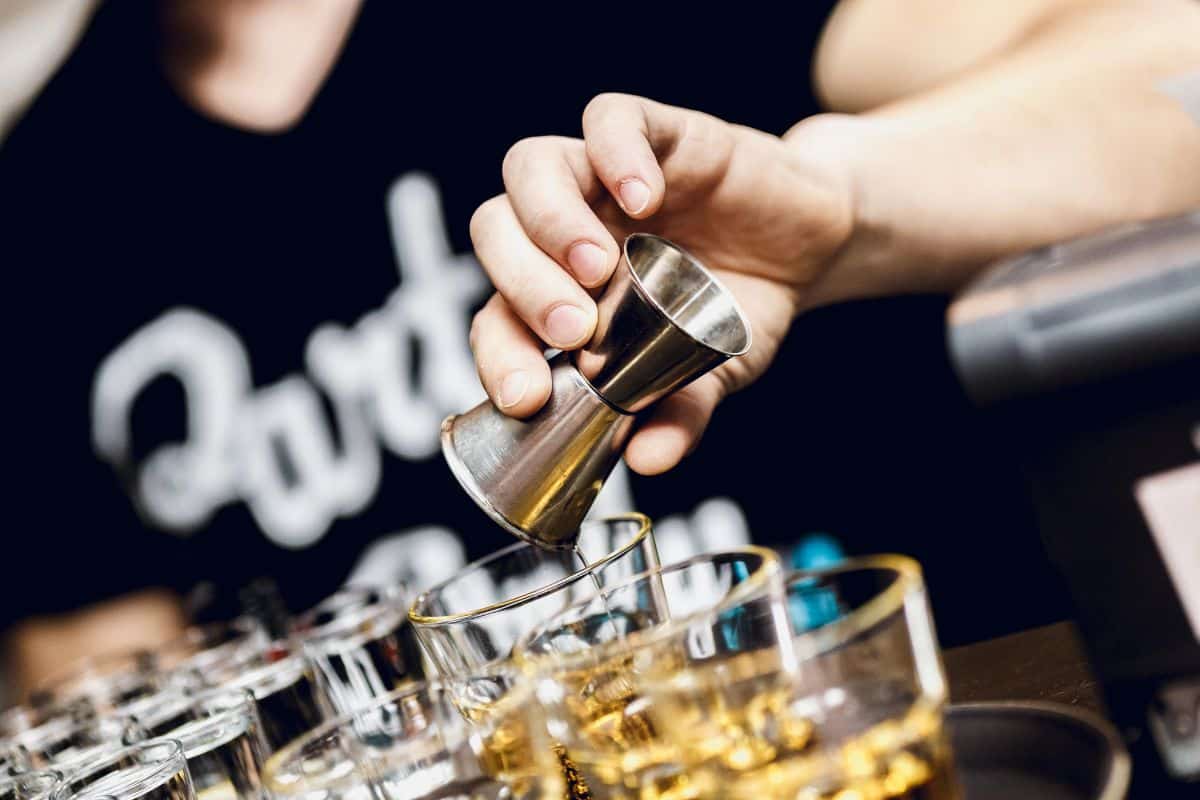
The jigger is the tool used for measuring the exact amounts of spirit needed in any cocktails, think the teaspoon and tablespoon of the cocktail world. Of course, who am I to tell you not to free pour, but most likely you will end up wasting a lot of the spirit you love and end up creating a, something kind of like, the cocktail you were going for.
What “One Jigger” Actually Means
The term itself is old and a little vague on purpose. Cocktail historian David Wondrich traces “jigger” back to “thingamajig,” the catch-all word for something you don’t know the name of. The tool’s identity has always been looser than the exact drink recipes it’s meant to measure.
There are others who claim it is a shorter version of the word “jiggermast,“ the smallest mast on a sail boat or what the 18th and 19th C British sailor called his daily ration of gin or rum. Yes, they were paid in spirits, which not surprisingly raised moral.
A sadly forgotten, but fabulously named, Cornelius Dungan patented the double-ended jigger we use now in 1893 in Chicago, one of my favorite drinking towns. It’s been called a jigger ever since.
How big are jiggers?
There’s no single universal size. In the US, a standard jigger typically measures 1.5 oz on one side and 1 oz on the other. In the UK and much of Europe, 25ml and 50ml are more common, sometimes 35ml. Some jiggers split into thirds or quarters instead of halves, which matters more than it sounds for drinks built on precise ratios.
Bell Jigger vs. Japanese Jigger
Bell jiggers are the classic hourglass shape, two cones joined at a narrow middle. They’re sturdy, cheap to find, and hard to tip over mid-pour. The tradeoff is precision. The wide cone mouths make it easy to misjudge the fill line, especially with the smaller side.
Japanese jiggers are taller, narrower, and usually angled slightly inward. The narrow shape makes the liquid level much easier to read accurately, and the angled lip is designed so you can see the fill line while pouring, without lifting the jigger to eye level. Most Japanese jiggers also mark fractional lines (1/4 oz, 3/4 oz) inside the cone, which bell jiggers rarely do.
If you’re mixing drinks that lean on precise ratios, a Japanese jigger will get you there more reliably. If you want something that won’t roll off the bar and don’t mind eyeballing slightly, a bell jigger is the more forgiving option.
Reading the Markings: Ounces, Milliliters, and the Fractional Lines
This is where most confusion actually starts. A jigger might show:
- Cone size labels (1 oz / 2 oz, or 25ml / 50ml) marking full capacity of each side
- Interior fill lines for fractional measures, often 1/4 oz, 1/2 oz, and 3/4 oz increments
- Dual unit markings, oz on one side of the line, ml on the other, common on jiggers made for international kitchens
Quick conversion if your jigger only shows one unit: 1 oz is roughly 30ml (29.57ml exactly, but nobody’s measuring that precisely at home). A 1.5 oz jigger is about 45ml. If a recipe gives you ml and your jigger only shows oz, that’s the math you need.
Larger format jiggers, 2 oz or 3 oz, exist mainly for batch cocktails or drinks that call for a heavier pour of one ingredient, like a Boulevardier’s whiskey base. Most home bars don’t need one unless you’re regularly making drinks at that scale.
Choosing the Right Jigger Size for How You Actually Drink
A double-sided jigger with a small and large cone (1 oz/2 oz or 25ml/50ml) covers the vast majority of home cocktails. If most of what you make leans toward stirred classics with 3/4 oz to 1 oz pours per ingredient, a jigger with finer fractional markings matters more than cone capacity.
Bartenders working a fast-paced bar often prefer bell jiggers for speed and durability under repeated use. At home, where speed matters less than getting the Negroni’s equal parts actually equal, the more readable Japanese style usually wins out.
How to Use a Jigger Without Losing Half the Pour
Rinse between spirits if flavors matter. A jigger that just measured Campari will tint the next clear spirit you pour into it.
Hold it level, not tilted, right up until you start pouring. Tilting early throws off your fill-line read.
Pour to eye level, or use an angled jigger’s built-in sightline so you’re not lifting the tool to check.
Pour slowly as you approach the line. Most spillage happens from pouring at full speed and overshooting by a few ml.
Empty over the mixing glass, not the sink side. Sounds obvious, but rushed pours often miss the target entirely.
Common Jigger Mistakes That Throw Off a Drink
Eyeballing the meniscus instead of reading it properly. Liquid curves at the edges. Read the measurement at the center of the liquid’s surface, not where it climbs the sides of the cone.
Assuming “1 jigger” means the same thing across every recipe. As covered above, it doesn’t. Check the actual unit before pouring.
Using a jigger that’s the wrong scale for the drink. Trying to measure a 1/4 oz dash of something in a jigger with no fractional lines usually means guessing, which defeats the purpose of using one at all.
Pouring too fast near the top. This is the most common cause of overfilling and spillage, and it’s a habit, not a tool problem.
Jigger vs. Free Pour: Do You Need One at All?
Free pouring, counting seconds instead of measuring, works fine once you’ve built enough muscle memory with a specific bottle’s pour rate. It’s faster and it’s how a lot of professional bartenders work a busy shift.
At home, it’s a harder habit to build because you’re not pouring the same bottles every night. A jigger removes the guesswork, and for cocktails where the ratio is the entire point (Negronis, Manhattans, most sours), it’s the more reliable choice until free pouring is second nature.
FAQ
Can I use a regular measuring cup instead of a jigger? For a single drink, sure, if it has small enough increments. It’s clumsier for repeated pours and lacks the fractional lines most cocktails actually need.
What’s the difference between an angled jigger and a standard one? An angled jigger has an interior line you can read from above while pouring, so you’re not lifting it to eye level mid-pour. It’s mainly a speed and convenience upgrade, not a different measurement standard.
Do I need a 3 oz jigger? Only if you regularly batch cocktails or make drinks with a heavy single-spirit pour. Most standard drinks are well covered by a 1 oz/2 oz or 25ml/50ml jigger.
My Favorite Jiggers
Now the fun part, there are lots and lots of different styles of jiggers to choose from, so I can only guide you to the ones I love. After testing out a variety of jiggers, I’ve rounded up the best options on Amazon. So, without further ado, here are our top picks for the best jiggers available on Amazon.
Japanese Style Jigger

If you’re looking for a high-quality jigger that’s easy to use and precise, a Japanese style jigger is a great choice. The rolled lip and professional welded structure make the double jigger look generous and beautiful, and it’s comfortable to touch.
OXO Steel Angled Jigger

If you’re looking for a reliable and durable jigger, OXO Steel Angled Measuring Jigger 1/2 oz is a great option. The patented angled surface allows you to read measurements from above, which is a game-changer. It eliminates the need to fill, check, and adjust measurements, saving you time and hassle. The convenient tablespoon and ounce measurement markings make it easy to measure small amounts of liquid ingredients.
Derrison Bell Jigger

The streamline shape of this cocktail jigger helps reduce friction and sore spots, making it comfortable to use for extended periods. Made from heavy weighted and polished Stainless Steel 304, this jigger is dishwasher safe and won’t chip or flake off. Precision engraved with every measurement line you’ll need to make any cocktail recipe, including 1/2oz, 1oz, 1 1/2oz, and 2oz.
A jigger is just the start of getting a home bar dialed in. Pair it with the right muddler if your drinks lean on fresh herbs or citrus, and make sure your glassware actually matches what you’re pouring, since even a perfectly measured Negroni looks and drinks differently out of the wrong glass. If you’re building things out from scratch, the full home bar setup guide walks through everything else worth having on hand.